
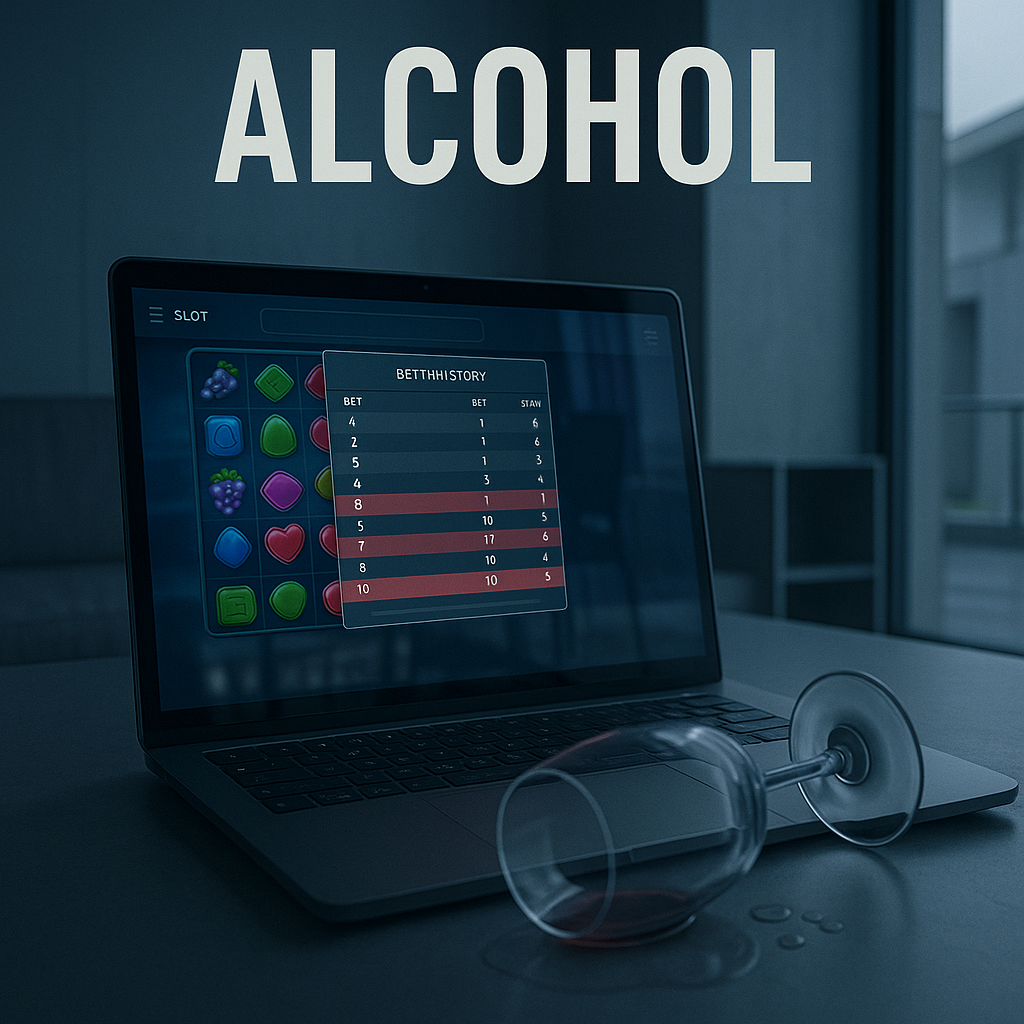
Alcohol and Slot Play: Why Control Is Lost
Alcohol and slots is a loss of control, not a neutral state. It doesn't 'stop you winning' — it changes behaviour and distorts risk.
Alcohol and slots is a loss of control, not a neutral state. The point isn't that alcohol 'stops you winning' — it changes the player's behaviour and distorts the perception of risk.
Distorted risk
Alcohol lowers critical thinking and control over actions. What a sober mind rates as risk starts to feel like a chance. The player stops analysing and acts impulsively, with a sense of 'feeling the game' — knowing when the slot will pay. That's not a skill; it's an illusion of control amplified by the state.
Burnout accelerates
After 1–2 hours, burnout grows. Concentration drops, logic yields to emotion. A familiar script appears: raise the bet, speed up, 'force the result'. The goal is no longer to understand what's happening but to close inner tension — and that almost always ends in a loss, because decisions come from state, not data.
The win effect
If a plus arrives while drinking, a false sense forms that 'it's paying everywhere today'. The player switches slots, raises bets, hunts a repeat. But the system doesn't change — only perception does. Alcohol amplifies the key mistakes: overrating your actions, ignoring distance, believing in a repeat, losing the stopping point, raising bets without analysis.
The frame
A casino is built on the player's emotions. Alcohol amplifies those emotions and removes the last defence — the ability to stop at the right moment. Under alcohol you don't analyse or control — you react. It's not about chance; it's a predictable outcome. Better not to run such experiments at all.