
Natasha Schüll’s *Addiction by Design*: How Slots Are Built to Keep You Playing (and Why It’s Not About Winning)
A player-first look at Natasha Dow Schüll’s *Addiction by Design*—the “machine zone,” why the industry optimizes for time on device, and why the slot’s real objective isn’t your win or loss, but keeping you seated.
A book analysis through a player’s lens. This is not medical advice and not advertising—just a candid look at how the slot itself is built, and what that means for the person sitting in front of it.
A modern slot can involve up to three hundred people: writers, artists, mathematicians, sound engineers, video teams, and ergonomics specialists. That’s a lot of effort—but for what, exactly? Anthropologist Natasha Dow Schüll spent fifteen years studying Las Vegas machine gambling from the inside: from clinics where players ended up, to closed industry trade shows where designers talk shop. In Addiction by Design (2012), she lands on an answer that flips the usual story.
All that engineering is aimed not at making you win, and not even at making you lose—but at keeping you from getting up for as long as possible. Below are her core ideas, applied to what’s closest for many of us today: the online slot.
The central insight: the goal isn’t to win—it’s to stay in the “zone”
Schüll opens with a conversation with Molly, a long-time video poker player. When asked whether she’s chasing a big hit, she waves the idea away: “I’m not playing to win,” she says. So why play? “To keep playing—to stay in that zone where nothing else matters.”
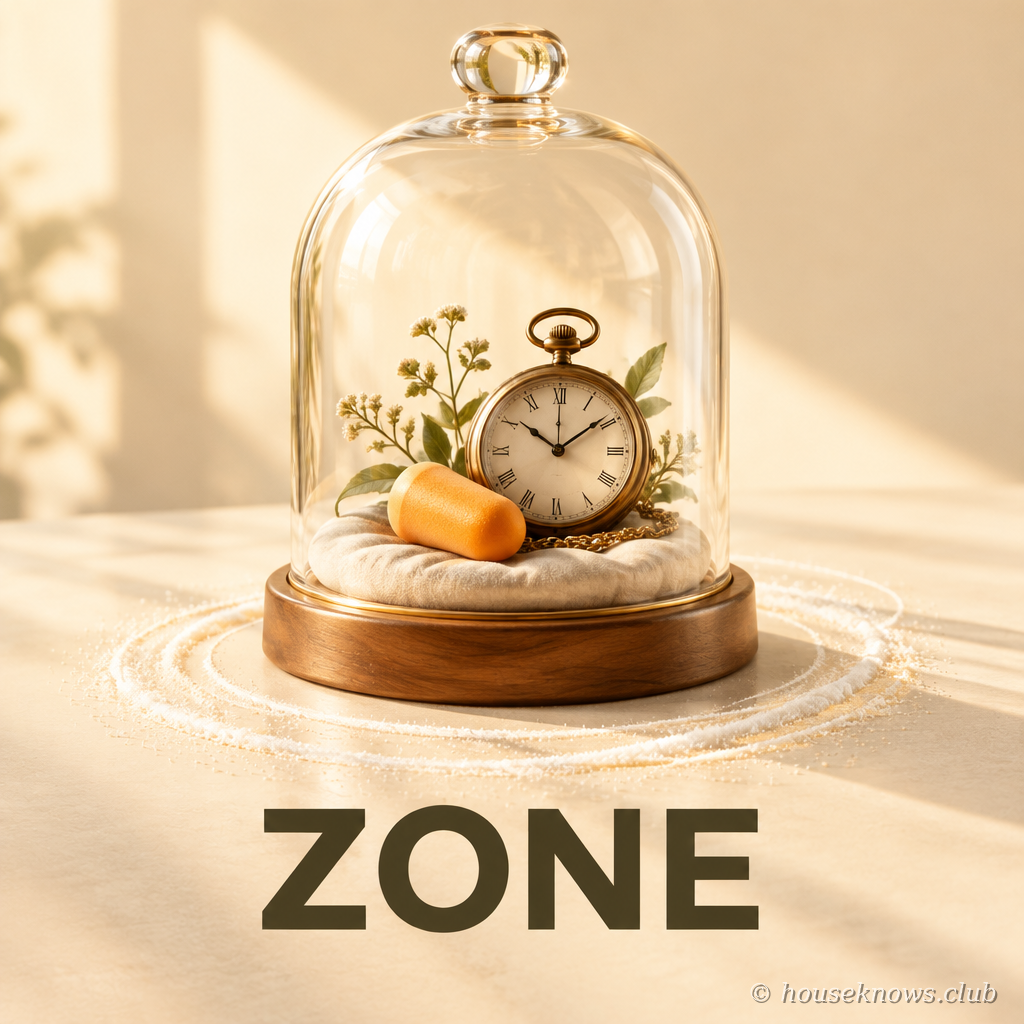
That word—the “zone” (the machine zone)—is the book’s organizing concept. In plain English: it’s a state where you dissolve into the game and stop noticing time, money, your body, and the outside world. It’s just you and the screen. Molly describes it as the “eye of a hurricane”: calm and clear in front of you, while the world spins somewhere outside and can’t reach you.
This isn’t classic thrill-seeking or anticipation of a prize. If anything, it’s closer to numbing—a way to drop out of anxiety, decisions, and whatever feels unsolvable in ordinary life.
The easiest analogy is familiar: a teenager zoning out for hours in an online game. Not because winning is everything, but because it’s a world that feels controllable—clear rules, no school pressure, no parents, no real-life mess. It’s the same escape into a manageable space. Schüll deliberately pairs Molly’s “zone” with a scene where Molly’s son is zoning out in a video game on the bed next to her: same mechanism, different product. The slot just takes it to an extreme—and charges real money for it.
This is the point that reframes everything. Culturally, we default to: people gamble to win, and “addiction” means “wanting to win too badly.” Schüll argues it often works differently. For the heavily involved player, winning stops being the point. A win is simply fed back into the machine so the session doesn’t end. The real objective becomes the state itself, and money becomes the fuel that keeps it going.
If you keep that in mind, long “autopilot” sessions look different. You weren’t sitting there because “it’s about to hit.” You were sitting there because you didn’t want to leave the zone.
“Time on device”: what the industry is actually selling
The most sobering part of the book isn’t the player stories—it’s the vocabulary of the builders. At trade shows, they don’t talk about the “joy of winning” or jackpots. They talk about time on device (TOD): how many minutes and hours a player stays at the machine.
That’s the industry’s headline metric: not what you win or lose per spin, but whether you remain there.
Schüll breaks down how almost every design decision is tuned for continuity: a button instead of a lever (less fatigue, faster pace), bill acceptors and tickets instead of coins (fewer interruptions), a curved screen and seating that narrows your world to the playfield, sound and light that fill the gaps. Every detail reduces reasons to stop. The old one-armed bandit forced small pauses between plays; the modern slot is built to make pauses disappear.
For anyone who thinks in data, that’s a direct bridge. The industry both hides and inflates this metric—while we can use the same session history to build visibility for the player. Our “Health Indicator” takes your sessions and shows your real time in play (along with money and emotional swings)—not to increase it, but to make the cost legible in numbers rather than in a haze of feeling. No predictions—just your own data, collected from the one place you can finally see it as a whole.
A slot wants you to lose track of spins, money, and time—because that’s what sustains the zone. That’s why honest spin counting works against it: once you can see the real number, the fog lifts.
Where the zone leads: “play to extinction”
If the goal is to stay in the zone, and money is the fuel, there’s an inevitable endpoint. The industry even has a blunt term for it: play to extinction. It’s the moment the player runs out of funds and the machine simply can’t continue.
Not “the player decided to stop,” but “there’s nothing left to play with.”
What hits hardest is how matter-of-factly this can be discussed on the industry side. At the G2E trade show in 2005, a representative of the manufacturer Cyberview explained the business logic to peers: the better you can match the machine to the player, the longer they’ll play to extinction—and the more revenue rises.
This needs to be understood cleanly, without myths. This is not a claim that someone is adjusting your odds in real time or “deciding” when you lose. Return to player (RTP—the share of stakes a slot returns on average over a huge sample) and the randomness of each outcome are designed into the game in advance and are fixed; they aren’t tweaked for an individual player spin-by-spin (more on that in what RTP is).
In Schüll’s framing, “matching the player” is design and personalization: comfort, pace, game selection, bonus offers, and tracking systems that do one thing—keep you playing longer. The casino doesn’t need to “rig” the next spin; it profits from duration. The longer you stay in action, the more reliably the built-in house advantage asserts itself.
So play to extinction isn’t a rare malfunction or an extreme edge case—it’s a planned, profitable outcome embedded in session length, not in some “targeted” individual spin.
This exposes the book’s central asymmetry. The player is sitting there not to win (they want the zone). The casino, meanwhile, is in the game to win. Two parties at one machine, but with different objectives—and the side whose objective is winning is the one positioned to win.
Mathematically, that’s the casino advantage: over time, the edge belongs to the house. And the more spins per hour, the faster that edge grinds down a bankroll. Speed isn’t abstract, either—it varies noticeably by provider. Nolimit City’s base pace is usually slow, Pragmatic Play tends to be mid-speed, Hacksaw Gaming often feels fast; turbo and autoplay push it further. With the same house edge, a faster slot can burn through the bankroll in less time.
That’s why speed is a lever you can control: pick a slower provider, turn off turbo, take breaks. This is also why bankroll management isn’t really a “winning system”—it’s how to ration fuel so you don’t drift into extinction on autopilot.
“Losses disguised as wins”: why it feels like you’re doing well
Schüll also covers how multiline slots learned to mask losses as wins. The research term she cites is LDW (losses disguised as wins). The mechanism is simple: you bet, say, one coin on 50 lines, and you “win” on one line—less than what you staked for that spin. In accounting terms, that’s a loss.
But the machine celebrates it like a victory: lights, coins, upbeat audio. As one developer told Schüll, positive reinforcement hides the loss—you feel rewarded while steadily losing.
This connects directly to what we discuss in “almost won” and the near-miss effect: the brain latches onto the sensation of success and closeness, not the net result. The antidote is the same: sober counting. Don’t track how often something “jingled.” Track what actually left your balance. The visual production of a spin says nothing about its result; only the number does.
The control paradox: why “just stop” doesn’t work
One of the most human parts of the book is about control. Schüll points out a paradox: the involved player wants control and wants to lose it at the same time. One of her subjects, Randall, describes throwing a handheld video poker device against a parking-lot wall—it survived and still worked. He gave devices away just to stop playing—and still came back. “All that stupid stuff you do to get control,” he says, “but you don’t have it.”
Here’s the right takeaway, without moralizing. If a slot is engineered by hundreds of people specifically to work against your ability to stop, then losing that fight on willpower alone is not evidence of a weak character—it’s a predictable outcome. Willpower fails not because you’re “soft,” but because the opposing side is years of design aimed at one thing: keeping you seated.
That leaves one practical conclusion: don’t rely on willpower in the moment. Rely on barriers set in advance, while your head is cool. In our earlier analysis of Dopamine Nation, this was described as “self-binding”: you set limits and self-exclusion for yourself ahead of time, knowing you’ll make worse decisions once you’re pulled into the zone. Not “giving up”—making a strong move while you still can.
The two books fit together well. Dopamine Nation explains the chemistry—why the brain drops from pleasure into craving. Schüll explains the engineering—how slot design exploits that chemistry to keep you there. Craving chemistry plus zone-optimized design is why “just one more spin” can feel so compelling.
A frank look at “responsible gambling”
Schüll doesn’t go easy on the industry. She shows an uncomfortable reality: the same business that designs the zone also sells “responsible gambling” tools—and sometimes does so in a way that shifts the entire burden onto the player (“gamble responsibly”) while the product design pulls in the opposite direction.
But the conclusion isn’t despair. It’s the opposite: if the slot is built against your self-control, then barriers—limits, time-outs, self-exclusion—aren’t “crutches for the weak.” They’re the only honest response to an unfair construction. You don’t owe the engineers a head-to-head willpower contest. You can simply refuse the fight.
And if gambling already feels out of control, that’s not a reason for shame and not the end of the story. You don’t need to handle it alone; concrete next steps are in our guide on where to get help.
What to watch for
- The zone’s goal isn’t winning—it’s the state. A deeply involved player often feeds wins back just to keep the session going. Seeing that is half of control.
- The industry optimizes “time on device,” not your outcomes. The slot is tuned so you don’t get up. Counting spins is one way to step outside that metric.
- “Play to extinction” is a plan, not a rare extreme. The better the product fits you, the longer you stay—and the more it earns.
- A win with fanfare can be a loss (LDW). Watch the balance, not the lights and sounds.
- You don’t beat engineering with willpower. What works are barriers set in advance, with a clear head—strength, not surrender.
The honest bottom line
Addiction by Design is dense and academic in places, and at times it reads more like an investigation than a casual read. But its main idea is one of the most useful lenses you can bring to gambling:
Slots pull you in not because you’re weak, but because they’re designed that way.
That isn’t an excuse (“the slot did it, I’m not responsible”). It’s a change in optics. You stop fighting yourself and start working with the structure: ration time and money, count spins, and put barriers in place before the zone has you.
If you’ve ever caught yourself sitting at a slot on autopilot and not fully sure why—this book explains what is holding you there. And its companion, Dopamine Nation, helps explain why it’s so hard for the brain to stand up. Together, they give you language to work with reality—not just vague advice to “play less.”
---
This is an analysis of Natasha Dow Schüll’s Addiction by Design: Machine Gambling in Las Vegas (2012), not a retelling and not a substitute for the book itself. We discuss the author’s ideas through a player’s lens; for clinical questions, speak to qualified professionals.