
Anna Lembke’s *Dopamine Nation*: why you crave “one more spin”
A gambler’s read of Anna Lembke’s *Dopamine Nation*: dopamine in plain English, why “one more spin” feels irresistible, and what helps restore balance.
A book analysis from a player’s point of view. This is not medical advice and not an ad — it’s an honest attempt to explain the mechanism behind craving, and what to do about it.
Some books talk about addiction in broad strokes. This one gets specific about the chemistry of wanting — why pleasure isn’t followed by calm, but by an urge to repeat it. In Dopamine Nation (2021), Stanford psychiatrist and addiction specialist Anna Lembke describes it so precisely that the phrase “just one more spin” stops being a mystery. Below are her core ideas, applied to what many of us know best: the slot.
A world of abundance — and our “pleasure machines”
Lembke opens with a simple but uncomfortable observation: we’ve moved from scarcity to overwhelming abundance of intense, easy stimuli — food, news, gaming, shopping, social media, gambling.
First, the key word: what is dopamine? The plain-English version: dopamine is the brain’s tag for “this matters — I want more.” It’s not pleasure itself, but a signal of anticipation and craving — the push to go get the thing.
Why is dopamine everywhere in modern conversations? Because the same dopamine-driven “reward pathway” (the brain circuit that essentially says “good job, do it again”) is involved in anything that hooks us — likes, sugar, bingeable shows, and yes, slots. Researchers even use dopamine responses to compare how habit-forming activities can be: the bigger and faster the dopamine spike, the stronger the pull to repeat. That’s why Lembke calls dopamine the “universal currency” of addiction — it’s a practical way to compare how different temptations grab us.
The book begins with a patient who, as a teenager, cobbled together a literal “pleasure machine” from a record player and spent hours keeping himself on the edge. It sounds extreme — until Lembke turns the lens back on the reader: most of us are sitting at some version of a machine. For some it’s a phone, for others it’s streaming, and for some it’s a slot. Online slots are one of the clearest examples: press a button and get a hit of dopamine — fast, frequent, and available 24/7.
The central model: the “pleasure ↔ pain” balance scale
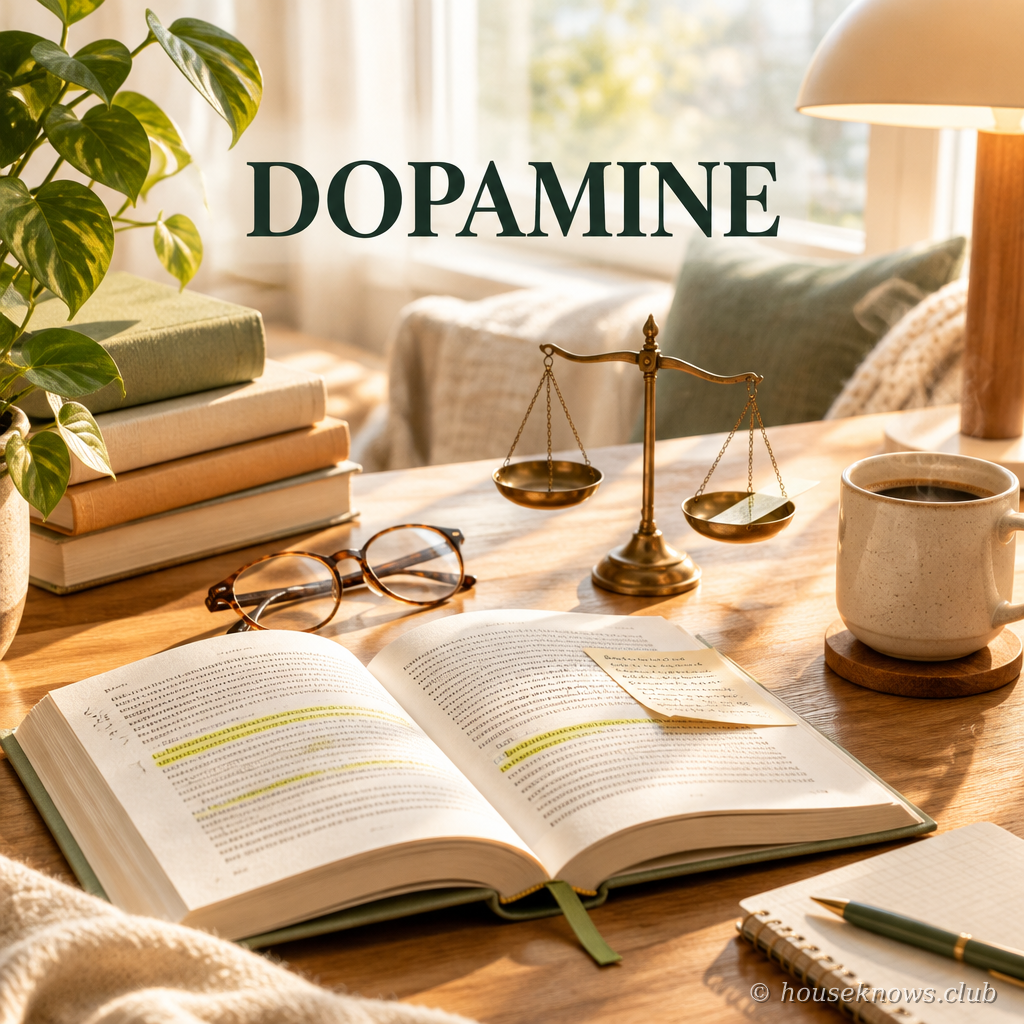
This is the mechanism that makes the book worth reading. Imagine the brain as a balance scale with a central pivot. Pleasure (and the dopamine that accompanies it) tips the scale one way. But the brain has a built-in rule: it doesn’t tolerate imbalance and constantly tries to restore equilibrium (homeostasis). Lembke illustrates this with little “gremlins” that jump onto the opposite side — the pain side — to counterweight the pleasure.
The catch is that the gremlins don’t jump off instantly. When the pleasure fades, the scale doesn’t return neatly to the middle — it overshoots into pain. That’s when you feel not calm, but a subtle emptiness, irritability, “I want more.” Psychologists Richard Solomon and John Corbit described this in the 1970s as the opponent-process theory: every high has a “price” — an opposing reaction afterward. Or, in plain terms: what goes up must come down.
Now translate that to slots. A win — or even a “near win” — tips you hard toward pleasure. Seconds later, the scale swings negative. And that tiny dip is what pushes the next spin: not because you “believe” in the win, but because you want to climb out of the hole the previous hit created. “One more spin” isn’t about luck. It’s an attempt to level the scale using the same lever that knocked it off balance in the first place.
Tolerance: why stakes and sessions tend to grow
Repeat a stimulus often enough and the brain adapts (in scientific language: neuroadaptation — the brain adjusts to a constant dopamine stream). The pleasure tilt becomes weaker and shorter, while the pain dip becomes stronger and longer. The gremlins multiply and move faster — and to get the same feeling as before, you need a bigger dose.
That’s tolerance: the old amount no longer works. It’s also a core driver of addiction.
In player terms, this is painfully familiar: the same bet stops “hitting,” so you want to raise the denomination, play longer, buy the bonus. Not because you suddenly became more reckless — but because the scale has shifted, and it now takes more to feel the same. Higher stakes aren’t “personality.” They’re the chemistry of adaptation.
Chasing losses as “relapse driven by dysphoria”
Neurobiologist George Koob described a state Lembke highlights as a turning point in addiction: “relapse driven by dysphoria.” Dysphoria is that grim, agitated, joyless mood where everything is irritating and nothing feels good. In that moment, people return to the stimulus not to feel pleasure, but to stop feeling awful during the prolonged crash. There’s little joy left — only the need for the bad feeling to end.
That’s chasing losses through the brain’s lens. You spin not because you expect a high — you’re trying to numb the pain of the scale tipped into the negative. And the longer you chase, the deeper the imbalance gets. The book makes it clearer why “winning it back” almost never works: you’re treating the pain with the very thing that’s creating it.
The good news: balance can return
Lembke doesn’t leave you there. The most hopeful section is simple: if you can hold a pause, the scale rebalances on its own. The brain adapts to the absence of the stimulus, the gremlins step off, and you regain the ability to enjoy ordinary life — a walk, a sunrise, dinner with people you love.
Her practical tool is “dopamine fasting”: a deliberate period of abstinence which, in her clinical experience, is around four weeks. One important detail from the book: research by Nora Volkow suggests that even after two weeks without a stimulus, dopamine transmission can still be below normal — meaning two weeks may not be enough; people may still be in a “deficit.” (And Lembke’s own clear caveat: with severe addiction — alcohol, opioids — quitting abruptly can be dangerous and should be supervised by a doctor; and roughly 20% of people don’t feel better after fasting, which can signal an underlying co-occurring disorder.)
For gamblers, there’s an uncomfortable honesty here. A break is a fight with yourself, and it can be genuinely hard. But it’s not hard because you’re “weak.” Your scale is tipped toward pain, and your brain is pulling you back — predictable chemistry, not a character flaw.
That’s also why sheer willpower (“just endure it”) often isn’t enough. Against that kind of imbalance, willpower runs out. What helps more than self-lectures are pre-set barriers (more on those below): while you’re thinking clearly, you limit your future options so you don’t have to “decide” mid-craving.
And one more point: a break is not “a pause before the next deposit.” A couple of days is rarely enough. You need a timeframe long enough for the scale to level — that’s when normal life starts feeling rewarding again without stakes.
Self-binding = our limits and self-exclusion
A major part of the book is self-binding: ways to put a barrier between yourself and the stimulus while your head is clear. Lembke groups these tools into physical (remove the substance, locks, blocks), time-based (restrict when access is possible), and meaning-based.
This is basically a description of casino limits and self-control — and self-exclusion tools. Lembke’s patient removed alcohol from the house; the player’s equivalent is deleting the app, setting deposit limits, turning on a time-out. The barrier is set before play, not during it — and it’s set by you.
But let’s be honest: taking that step can feel brutal — not because of weak character, but because of what feels at stake. Often the person is already in a hole: money that shouldn’t have been gambled, sometimes not even their own — rent, a child’s education, basic necessities. The mind locks onto one goal: get it back now. In that state, “stop for weeks” doesn’t sound like self-care; it sounds like “it’s over, I gave up.” That’s real, heavy responsibility — and many gamblers carry it alone. That’s why “just take a break” is so hard to accept, and why it’s dishonest to pretend it’s easy.
Still, the hard truth is this: chasing the return is what drives you deeper. The scale is already tipped — each additional spin doesn’t restore balance on average; it takes more away. Stopping isn’t “it’s over.” It’s stop digging the hole. And self-exclusion isn’t surrender — it’s discipline and self-motivation: turn off the tap before a heated moment makes things worse.
What if it feels like everything is already ruined right now? Honestly, without comforting lies: gambling won’t reverse what’s lost — trying to “get it back” typically increases the damage (the house edge is real, and panic makes decisions worse). So step one is not “recover it,” but stop the bleeding: cut access (limits, self-exclusion, delete the app) before the next impulsive decision. Step two is don’t carry it alone: tell someone you trust; temporarily hand over control of your money; if there are debts or someone else’s funds involved, contact a help line — that’s not shameful. And remember: the feeling of “it’s all over” is often the crash of the scale — the scream of the dopamine hole. It’s strongest during the downswing, and it will pass; with a clear head, the exit is almost always wider than it looks in the moment. For concrete “right now” steps, see where to get help.
Radical honesty = sober accounting
Another tool Lembke emphasizes is radical honesty: telling yourself the truth about your behavior, without polishing it. Addiction thrives on double lives and internal rationalizations.
In gambling, that maps directly to sober accounting instead of “almost hit” thinking: count how many dead spins you actually played, not how many times you “were so close.” The honest number breaks the illusion of being near a win — the illusion that keeps the craving alive.
What to take away
- The “one more spin” urge is the brain’s balance chemistry, not a sign of luck. After a hit, the brain dips negative; the next spin is an attempt to escape that dip — which only amplifies the swing.
- Rising stakes are tolerance. You need a larger dose for the same feeling. Recognizing that pattern is already part of regaining control.
- Chasing is pain relief, not pleasure-seeking. That’s why “winning it back” fails so often.
- A real break can reset you. Not two days — weeks. That’s how everyday life becomes rewarding again.
- Limits and self-exclusion are self-binding. Active self-discipline, not weakness — and they work best when set calmly, in advance.
An honest conclusion
Dopamine Nation isn’t specifically about gambling, but it offers a map of the mechanism behind any craving — including slots. It’s readable, story-driven, and not preachy; some points are debatable (fasting isn’t a cure-all, and Lembke says so herself), but the “balance scale” model is one of the most useful explanations of craving you can get in a single evening.
If you’ve ever caught yourself saying “just a little more,” this book explains why — and gives you language to work with it. And if play is already out of control, start not with the book but with the steps on where to get help.
This is an analysis of Anna Lembke’s Dopamine Nation (2021), not a replacement for the book — and not medical guidance. We discuss the author’s ideas through a player’s lens; for clinical recommendations, speak to a professional.