
The Slot Starts Hot, Then Goes Cold: When to Stop?
A strong first 200 spins can be real—but it can also be a *false window* that tricks you into chasing a dead stretch. Here’s what the data says about spotting the cooldown and ending the session on time.
You can see slot “activity” in big-hit density
We don’t define “activity” by gut feel. You can see it in the data: the density of big events—payouts above x15—across a segment. The tighter those events cluster, the more “active” the slot is during that period. This comes from analytics on real betting histories, not vibes.
What a false window is
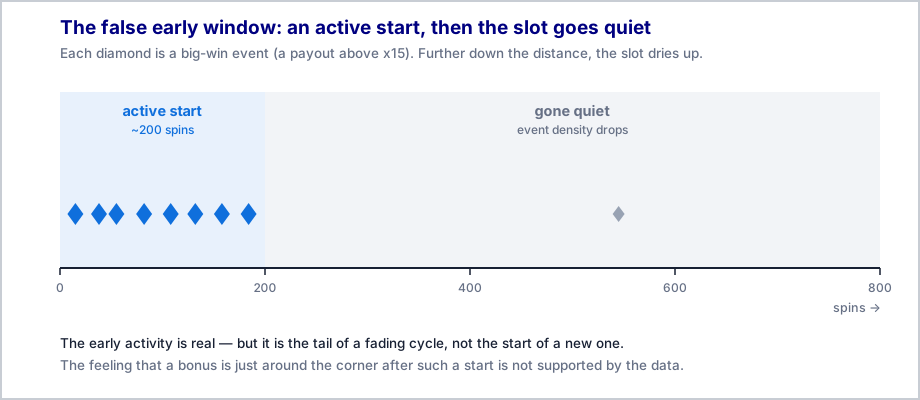
A common pattern looks like this: for the first ~200 spins, a slot is genuinely active—big events land frequently, and it feels like the game has “woken up.” Then it goes quiet: event density drops and the session dries up.
That’s a false window: an active start followed by a cooldown. The early activity was real—it just didn’t continue.
Why it’s a trap for your decision-making
The danger isn’t the window itself. It’s what it does to your choices.
After a lively start, the brain flips into: “It was just paying—bonus must be close—just a little more.” So you keep spinning a slot that has already cooled off, feeding your bankroll through a dead 300–400 spins—simply because it feels like the hit is near.
But the data points the other way. Betting histories show slot behavior isn’t pure chaos: bonus cycles have a visible structure over distance. And an active start that fades isn’t a “warm-up before a bonus.” It’s a signal that the activity window has already passed, and you’re now sitting in the downswing phase.
In other words: the cycle says “it’s already behind you,” while your head hears “any second now.”
You understand it later—but you need the decision now
Honestly, you usually recognize a false window in hindsight, after that segment is already played out. No one can predict the next spin.
The practical skill isn’t prediction. It’s noticing in time that the slot has gone quiet—and stopping instead of chasing.
Self-control versus intuition
The hard part is that self-control contradicts what feels logical in the moment. Intuition says “keep going, it’s close”—and that’s exactly when the better decision is the opposite: end the session instead of funding the cooldown.
Being able to stop where you most want to chase is what separates deliberate play from a drained bankroll. The goal isn’t to “catch the window,” but to avoid letting a false window pull you into the red.